Backpacker Mike Yeo, has been a leader and member of Troop 318 since 2009. He got involved when his 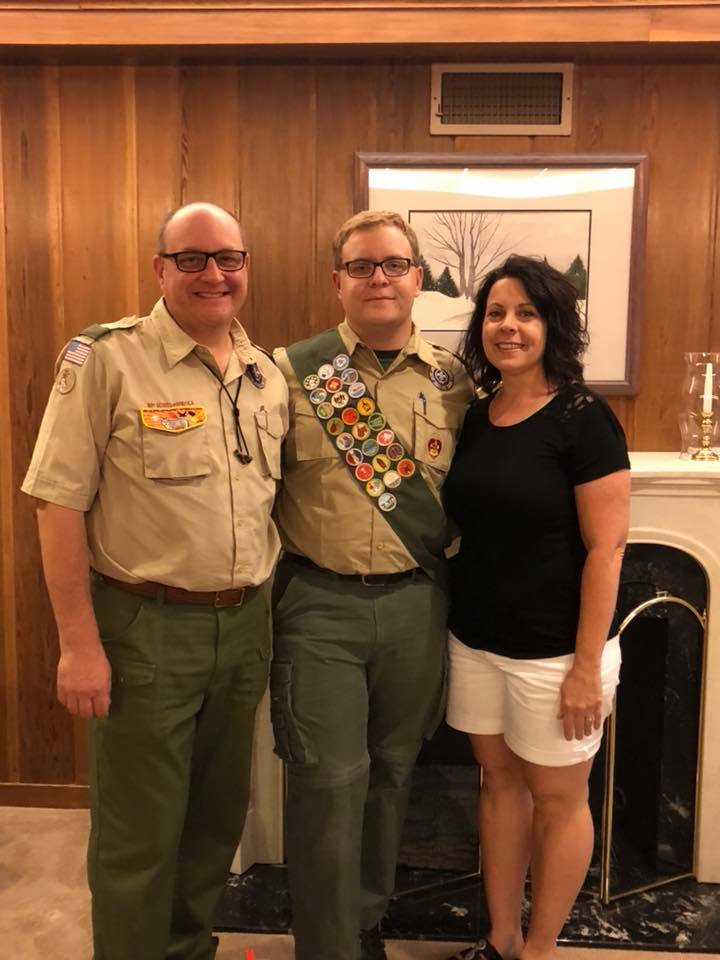 youngest son, Brian joined the Troop. “I love camping and outdoor activities, so it was easy to start helping and I have loved Scouting ever since.” Hammock camping is a great way to be up off the ground and stay dry. “I have been hammock camping since 2005. I’ve hiked 11,000 feet in Colorado and have discovered the most successful and safe way to go hammocking on all kinds of camping trips.”
The following are tips from Mike, for any Scout, that would like to try hammocking on their next camping trip, or you could try it out in your back yard!
- Make sure to choose a safe place to hang your hammock.
Check the trees above you and around you for dead limbs that may fall during an unexpected storm or high winds. Remember that trees nearby can also pose a danger. Do not hang your hammock over water or near a steep embankment, waking up in the middle of the night can be surprising if you walk the wrong way!
- Hang your hammock a little loose.
Leave some slack in your hammock or the sides will wrap around you too tight and you will have less room to move around to find you comfort spot. I also lay diagonally in my hammock which allows me to lay flatter.
- Don't hang your hammock too high off the ground.
Hammock camping can be a fun alternative to using a tent. Stay safe by following the safety guidelines, suggested by the BSA Health and Safety team and hang your hammock no more than 3 feet off the ground. Keeping your hammock at sitting level has worked best for me, it is easier to get in and out of and if it does start to rain the wind will not blow under your rain fly as easily.
- Use a bug net and rain fly.
I always use a bug net and rain fly when camping during bug and rain season, there is nothing that will ruin a camp out more than not sleeping all night because of mosquitoes or getting rained on.
- Tie a tight line above your hammock.
A tight line will help keep your rain fly from sagging and it is very useful to hang a light or other gadget from.
- Use a under quilt or sleeping pad in the hammock.
Hammocks are colder to sleep in because of the lack of insulation under your body so using a under quilt or putting a sleeping pad in the hammock to sleep on will be much more comfortable during colder nights. You can make an under-quilt yourself with old sleeping bags!
- Cold weather hammock camping.
When using a hammock in cold weather (below 30 degrees F) you will need additional equipment and should not attempt to hammock as a beginner. I use an under quilt which gives insulation under you as well as around your sides. I also use a large tarp draped over the tight line and clip the ends shut so there is only a small hole at the bottom to crawl up into my hammock. The tarp will help keep your body heat in the enclosed area, but you will still need a sleeping bag rated to the temperature you are camping.
- Hammock with friends
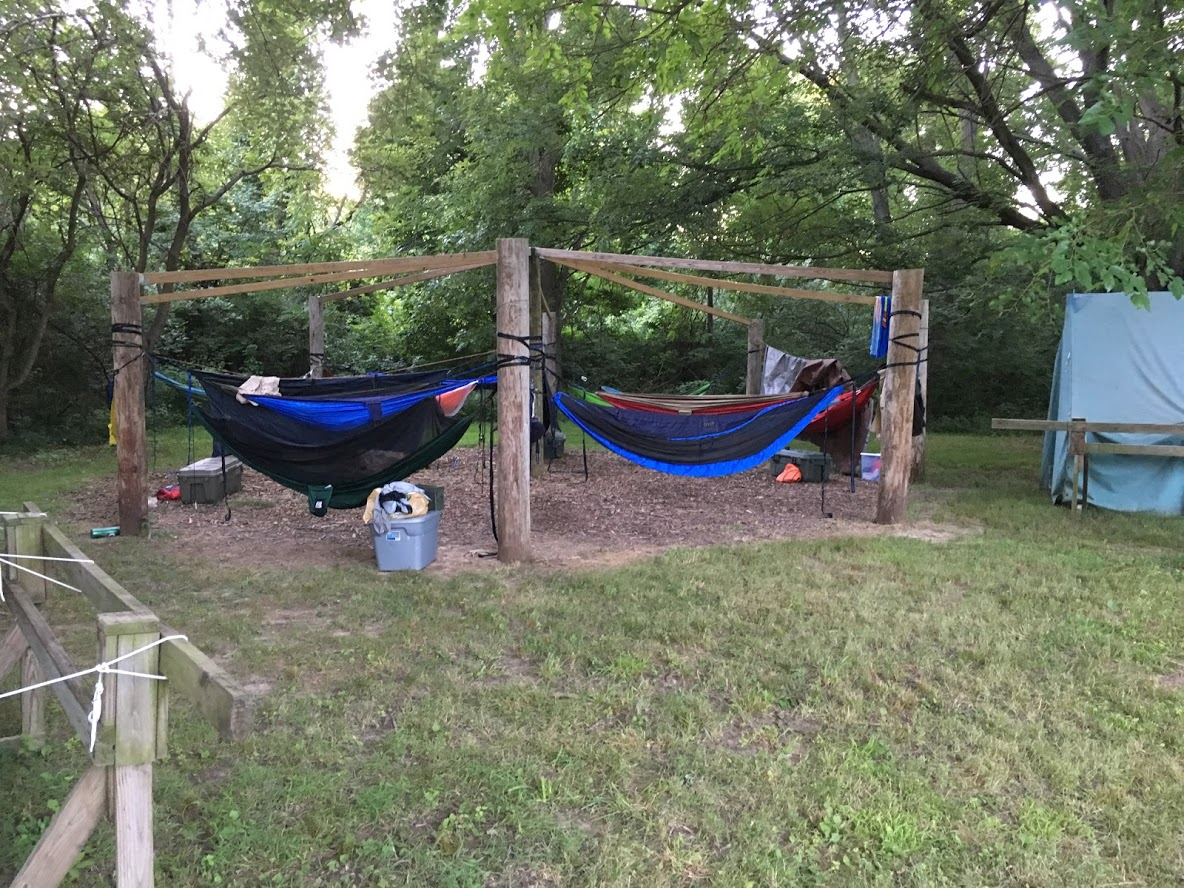
Our Troop helped build a hammock hut at Camp Berry and it has been one of our best projects and all the Scouts have a blast covering the hut with their own tarps.